
The Ultimate Guide to Heat Pump Troubleshooting for Homeowners
Learn to fix common heat pump issues and maintain efficiency year-round with expert tips and seasonal checklists for optimal comfort.
Heat pumps are the heart of home comfort, ensuring warmth in winter and cool air in summer. Knowing how to troubleshoot common problems can save time, money, and stress when issues arise. This guide simplifies heat pump troubleshooting with practical, step-by-step advice.
From tackling common heat pump issues like freezing or unusual noises to offering heat pump maintenance tips, we’ll help you keep your system running efficiently year-round.
Dive in to discover quick fixes and know when to call a professional—because a comfortable home starts with a well-functioning heat pump.
How Heat Pumps Work
Basic Components of a Heat Pump
A heat pump uses several key components to transfer heat and maintain your home’s comfort. Here’s a high-level overview:
Compressor:
The "heart" of the system circulates refrigerant between the indoor and outdoor units to transfer heat.
Evaporator and Condenser Coils:
These coils exchange heat with the surrounding air. During cooling, the evaporator coil absorbs heat indoors, while the condenser coil releases it outside. In heating mode, their roles reverse, absorbing heat from outside and releasing it indoors.
Refrigerant:
A fluid that carries heat between the coils, enabling the heat transfer process.
Fan:
Moves air over the coils, aiding in heat exchange.
Reversing Valve:
Allows the heat pump to switch between heating and cooling by reversing the direction of refrigerant flow.
These components work seamlessly to keep your home comfortable in any season.
Understanding the Heat Pump Cycle
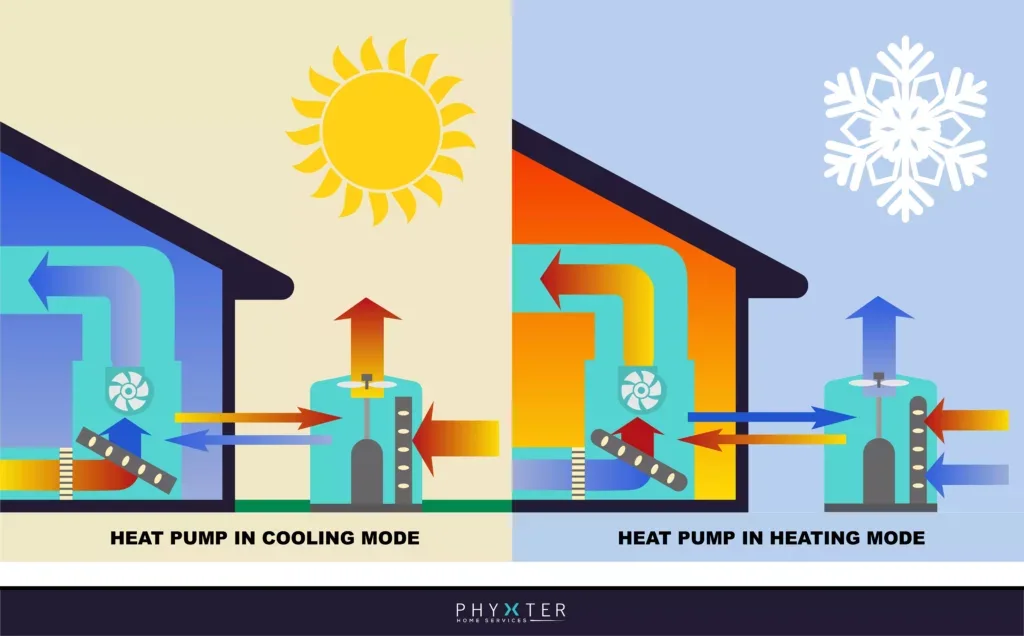
Image Courtesy of Phyxter Home Services
A heat pump transfers heat rather than generates it using a process called the refrigeration cycle.
- Cooling Mode: The system extracts heat from indoor air through the evaporator coil and releases it outdoors via the condenser coil. Refrigerant absorbs the heat indoors, compresses it to a high temperature, and releases it outside.
- Heating Mode: The process reverses. The heat pump absorbs heat from outdoor air (even in cold weather) via the condenser coil, compresses it, and transfers it indoors through the evaporator coil.
This cycle is enabled by the reversing valve, which changes the direction of refrigerant flow. If the cycle isn’t functioning, you might notice insufficient heating or cooling, frost buildup on the coils, or constant heat pump running.
Common Heat Pump Problems and Their Fixes
Each issue includes causes and actionable fixes under the same heading for seamless troubleshooting.
1. Heat Pump Not Heating or Cooling Properly
Several common issues could be at play if your heat pump isn’t heating or cooling effectively.
Thermostat Settings: Incorrect settings or a faulty thermostat can prevent the system from operating as intended.
- Fix: Ensure the thermostat is set to the correct mode (heating or cooling) and temperature. Replace batteries if needed, and recalibrate or replace the thermostat if it’s not responding.
Dirty Air Filters: Clogged filters reduce airflow, causing inefficiency and uneven temperatures.
- Fix: Check and replace air filters regularly, ideally every one to three months, depending on usage.
Low Refrigerant Levels: If the refrigerant is low, the system may struggle to transfer heat effectively.
- Fix: Contact a licensed HVAC technician to inspect the system, refill the refrigerant, and repair leaks.
Blocked Vents: Obstructions like furniture or debris can restrict airflow and disrupt heating or cooling.
- Fix: Ensure all vents and registers are clear and unobstructed for proper circulation.
Addressing these issues can restore functionality, ensuring your heat pump provides consistent comfort. If the problem persists, professional inspection may be required.
📘 Related Reading: Why is My Heat Pump Not Cooling?
2. Heat Pump Freezing Up
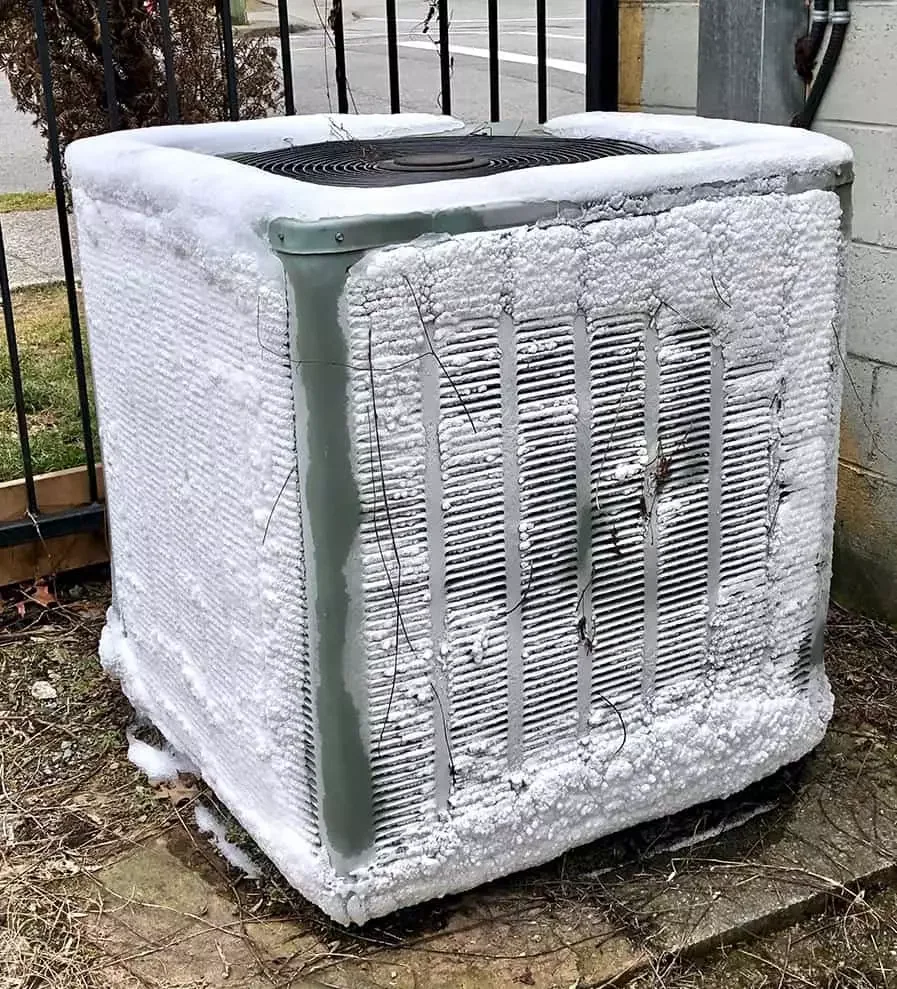
A heat pump freezing up is a common problem, especially during colder months. Here are the main causes and their solutions:
Restricted Airflow: Insufficient airflow over the coils can cause ice to form. This is often due to dirty filters, blocked vents, or debris around the outdoor unit.
- Fix: Replace or clean air filters to restore airflow. Clear any obstructions around vents and registers, and remove debris from the outdoor unit to ensure proper ventilation.
Refrigerant Leaks: Low refrigerant levels can make the evaporator coil too cold, causing it to freeze.
- Fix: Look for signs of refrigerant leaks, such as oily residue or reduced system efficiency. Contact an HVAC technician to repair leaks and refill refrigerant.
Malfunctioning Defrost Cycle: A faulty defrost system may fail to remove frost from the outdoor unit.
- Fix: Check the defrost timer and controls. If the defrost cycle doesn’t engage, reset the system or consult a technician for further diagnosis.
Ice or Snow Accumulation: Outdoor units can become encased in ice during severe weather.
- Fix: Turn off the heat pump and gently remove ice or snow with warm water (not hot).
3. Heat Pump Making Unusual Noises
A heat pump making noise can indicate underlying issues. Here are common sounds and what they might mean:
Banging or Clanking: These noises often signal loose or broken components, such as a loose fan blade or disconnected part in the compressor.
- Fix: Turn off the system and inspect for loose screws or parts. Tighten any loose components or contact a technician if the compressor is damaged.
Buzzing: This sound could result from electrical issues, such as a failing capacitor, loose wiring, or a malfunctioning motor.
- Fix: Check for visible wiring problems or debris caught in the fan. For persistent buzzing, call a professional to inspect the electrical system.
Squealing or Screeching: These noises may indicate worn-out motor bearings or a failing belt.
- Fix: Lubricate the motor bearings or replace the belt. Consult an HVAC technician if lubrication doesn’t resolve the issue.
Whooshing: A whooshing sound often occurs during the defrost cycle, which is a normal process.
- Fix: No action is required unless the noise persists outside of the defrost cycle, in which case a technician should inspect the system.
4. Heat Pump Running Constantly
A heat pump running nonstop can indicate inefficiencies or system problems. Here are common causes and fixes:
Thermostat Placement: If the thermostat is near a heat source or in direct sunlight, it may sense inaccurate temperatures and overwork the system.
- Fix: Relocate the thermostat to a neutral location away from heat sources and drafts.
Clogged Filters: Dirty air filters restrict airflow, forcing the heat pump to run longer to reach the desired temperature.
- Fix: Replace air filters regularly, ideally every one to three months, depending on usage and environmental factors.
System Sizing Issues: An undersized heat pump may struggle to meet your home’s heating or cooling demands, leading to continuous operation.
- Fix: Consult an HVAC technician to assess the system size. Upgrading to a properly sized unit may be necessary for efficient operation.
Low Refrigerant Levels: Insufficient refrigerant can reduce the system’s ability to transfer heat, causing it to run constantly.
- Fix: Contact a professional to inspect and refill refrigerant if needed.
Outdoor Unit Blockage: Debris or snow around the outdoor unit can hinder heat exchange, leading to nonstop operation.
- Fix: Clear debris or snow from around the unit to ensure proper airflow.
5. Heat Pump Short Cycling
Short cycling occurs when a heat pump frequently turns on and off without completing a full heating or cooling cycle. This can cause wear on the system and reduce efficiency.
Refrigerant Imbalances: Low or excessive refrigerant levels can disrupt the heat pump’s pressure balance, leading to short cycling.
- Fix: Contact an HVAC technician to inspect for leaks, restore the correct refrigerant levels, and repair any damage.
Faulty Thermostat: A malfunctioning thermostat or one placed in an unsuitable location (near heat sources or drafts) can signal the system to turn on and off unnecessarily.
- Fix: Recalibrate the thermostat or replace it if faulty. Relocate it to a neutral spot away from temperature extremes.
Oversized System: A heat pump that is too large for your home may heat or cool the space too quickly, causing frequent cycling.
- Fix: Consult an HVAC expert to evaluate system sizing. If the unit is oversized, consider upgrading to a properly sized heat pump.
Clogged Filters: Restricted airflow can force the system to short cycle.
- Fix: Replace dirty filters regularly to maintain proper airflow.
6. Heat Pump Blowing Cold Air in Heating Mode
A heat pump blowing cold air during heating mode can be frustrating and often points to these common issues:
Defrost Cycle: During colder weather, the heat pump may enter a defrost cycle to remove ice from the outdoor unit. This temporarily redirects heat outdoors, causing cold air to blow indoors.
- Fix: Wait for the defrost cycle to complete. If the unit remains in defrost mode for extended periods, consult a technician to inspect the defrost controls.
Incorrect Thermostat Settings: The thermostat may be set to cooling mode, fan-only mode, or an inappropriate temperature.
- Fix: Check the thermostat and set it to “heat” mode with a comfortable temperature setting. Ensure the fan is set to “auto” rather than “on.”
Low Refrigerant Levels: Insufficient refrigerant can prevent the heat pump from effectively heating the air.
- Fix: Contact an HVAC professional to inspect for leaks, refill refrigerant, and restore proper system operation.
Leaky Ductwork: Air leaks in ducts can allow cold outdoor air to mix with heated air.
- Fix: Inspect accessible ductwork for gaps and seal leaks with mastic or foil tape.
7. Heat Pump Not Turning On
When a heat pump doesn’t turn on, the issue often stems from power or control problems. Here are common causes and their fixes:
Tripped Circuit Breaker: Power surges or overloads can trip the circuit breaker, cutting power to the heat pump.
- Fix: Locate the circuit breaker panel, find the switch labeled for the heat pump, and reset it by flipping it off and back on.
Thermostat Issues: A malfunctioning or unpowered thermostat can prevent the system from starting.
- Fix: Check that the thermostat is set to the desired mode (heat or cool) and temperature. Replace batteries if the thermostat is battery-powered. If unresponsive, recalibrate or replace the thermostat.
Power Switch or Disconnection: The external power switch near the heat pump might be turned off or disconnected.
- Fix: Ensure the switch is in the “on” position and that the heat pump is securely plugged in.
Faulty Contactor or Wiring: Electrical components inside the unit, such as the contactor, could be damaged.
- Fix: Inspect visible wiring for signs of wear or damage. Contact an HVAC technician for professional repairs if needed.
8. Heat Pump Turning On and Off Frequently
Frequent cycling, also known as short cycling, can stress your heat pump and reduce efficiency. Here are common causes and their solutions:
Dirty Filters: Clogged air filters restrict airflow, causing the system to overheat and shut off prematurely.
- Fix: Inspect and replace filters regularly, ideally every one to three months, to ensure proper airflow.
Thermostat Misplacement: If the thermostat is near a heat source or draft, it may register inaccurate temperatures and signal the system to turn on and off unnecessarily.
- Fix: Relocate the thermostat to a neutral area, away from heat-producing appliances, sunlight, or drafty windows.
Refrigerant Issues: Low or imbalanced refrigerant levels can disrupt the heat pump’s operation, leading to frequent cycling.
- Fix: Contact a licensed HVAC technician to inspect for leaks and restore the correct refrigerant levels.
Oversized Heat Pump: A heat pump that is too large for your home will heat or cool the space too quickly, causing it to cycle frequently.
- Fix: Consult an HVAC professional to evaluate the system size. Consider replacing it with a properly sized unit if necessary.
Electrical Problems: Faulty wiring or a failing capacitor can cause the system to short cycle.
- Fix: Contact an electrician or HVAC technician to inspect and repair electrical components.
9. Heat Pump Producing Odors
A heat pump producing unusual odors can indicate underlying issues that require attention. Here are common causes and their solutions:
Mold or Mildew in Ductwork: Moisture buildup in ducts can lead to mold or mildew growth, causing a musty smell.
- Fix: Inspect ducts for signs of mold and have them professionally cleaned. Consider installing a dehumidifier to prevent future moisture issues.
Dirty Air Filters: Dust, debris, and bacteria trapped in clogged filters can emit unpleasant odors.
- Fix: Replace air filters regularly, ideally every one to three months, depending on usage and environmental conditions.
Burnt Electrical Components: A burning smell may signal overheating or failing electrical components, such as a motor or wiring.
- Fix: Turn off the system immediately and contact an HVAC technician to inspect and repair damaged components.
Rotten Egg Smell: This could indicate a natural gas leak near a gas-powered heat pump.
- Fix: Evacuate the home and contact your gas company immediately for emergency assistance.
Dead Animals in Ducts: A foul odor may result from pests trapped in the ductwork.
- Fix: Have the ducts inspected and cleaned by a professional.
10. Outdoor Unit Fan Not Working
When the outdoor unit fan isn’t working, it can compromise the heat pump’s ability to heat or cool your home. Here are the common causes and fixes:
Motor Failure: A faulty fan motor can prevent the blades from spinning, often due to wear and tear or electrical issues.
- Fix: Contact an HVAC technician to inspect and replace the motor. Attempting DIY repairs can be dangerous without proper tools and expertise.
Capacitor Issues: The capacitor provides the initial jolt of power to start the fan motor. If it’s failing, the fan may not start or run properly.
- Fix: Call a professional to test and replace the capacitor if necessary.
Debris Obstruction: Leaves, twigs, or dirt can block the fan blades, preventing them from turning.
- Fix: Turn off the heat pump and clear away any debris. Ensure there is at least two feet of clearance around the unit for proper airflow.
Electrical Problems: Damaged wiring or a tripped circuit can cut power to the fan.
- Fix: Check the circuit breaker and reset it if needed. For wiring issues, consult a licensed technician.
11. Heat Pump Leaking Water
Water leakage from a heat pump is often a sign of underlying issues. Here are common causes and solutions:
Clogged Condensate Drain: A blocked condensate drain line prevents water from properly draining, causing it to back up and leak.
- Fix: Turn off the heat pump and locate the drain line. Use a wet/dry vacuum or pipe cleaner to remove any blockages. Flush the line with water to ensure it’s clear.
Frozen Coils: Ice on the evaporator coils can melt and cause water to drip excessively. This is often due to restricted airflow or low refrigerant levels.
- Fix: Replace dirty air filters to improve airflow. If the problem persists, contact a professional to inspect for refrigerant leaks and refill as needed.
High Humidity: Excess humidity can overwhelm the heat pump’s ability to dehumidify, resulting in condensation buildup.
- Fix: Use a dehumidifier to manage indoor moisture levels. Ensure the unit is properly sized for your home’s needs.
Improper Installation: A tilted or poorly installed unit can cause water to pool and leak.
- Fix: Have a technician inspect and adjust the unit’s placement for proper drainage.
12. Thermostat Issues
Thermostat problems can disrupt your heat pump’s performance, leading to uneven temperatures or inefficiency. Common causes include:
Incorrect Settings: The thermostat may be set to the wrong mode (e.g., cooling instead of heating) or an unsuitable temperature.
- Fix: Check the thermostat settings and set the mode to “heat” or “cool” as needed. Adjust the temperature to a comfortable level and ensure the fan is set to “auto.”
Faulty Device: A malfunctioning thermostat can fail to send accurate signals to the heat pump, causing inconsistent operation.
- Fix: Replace batteries and test the thermostat’s responsiveness. If it continues to malfunction, consider recalibrating it or replacing it with a newer, programmable model.
Improper Placement: Thermostats installed near heat sources, drafty areas, or direct sunlight can register inaccurate readings, leading to over- or under-performance.
- Fix: Relocate the thermostat to a neutral, central location away from temperature extremes.
Wiring Problems: Loose or damaged thermostat wires can disrupt communication with the heat pump.
- Fix: Inspect wiring connections for wear or damage. Call an HVAC technician for complex wiring repairs.
13. Electrical Problems
Electrical issues in a heat pump can prevent it from functioning properly and may pose safety risks. Here are common causes and solutions:
Tripped Circuit Breakers: Power surges or system overloads can trip the breaker, cutting power to the heat pump.
- Fix: Locate the circuit breaker panel and reset the breaker by flipping it off and back on. If the breaker trips repeatedly, consult a technician to identify the root cause.
Damaged Wiring: Frayed or loose wires can disrupt power flow and cause intermittent operation or failure.
- Fix: Turn off the power and inspect visible wires for wear or damage. For internal wiring issues, call a licensed HVAC technician or electrician.
Failing Capacitor: The capacitor provides the electrical charge needed to start the heat pump’s motor. A failing capacitor can prevent the system from turning on or running efficiently.
- Fix: Contact a professional to test and replace the capacitor if necessary.
Burnt Components: Electrical components such as relays or contactors can overheat and fail.
- Fix: Turn off the system and contact a technician to replace damaged parts.
14. Refrigerant Issues
Refrigerant plays a critical role in heat pump operation, transferring heat to warm or cool your home. Low refrigerant levels or leaks can lead to reduced performance and system damage.
Symptoms of Refrigerant Issues:
- Ice Buildup: Ice forming on the evaporator coils often indicates insufficient refrigerant, which prevents proper heat transfer.
- Hissing Sounds: A hissing or bubbling noise near the refrigerant lines may signal a leak.
- Reduced Efficiency: Inconsistent temperatures or longer heating/cooling cycles can result from low refrigerant levels.
Causes of Refrigerant Problems:
- Leaks: Cracks or wear in refrigerant lines are common sources of leaks.
- Improper Installation: Incorrectly installed systems may have insufficient refrigerant from the start.
Fixes for Refrigerant Issues:
- Inspection and Repairs: Only certified HVAC technicians can safely identify and repair refrigerant leaks.
- Refilling Refrigerant: Professionals will restore the correct refrigerant levels to ensure optimal performance.
Attempting to handle refrigerant yourself can be hazardous and may void warranties. Address refrigerant issues promptly to maintain efficiency, prevent coil damage, and extend the lifespan of your heat pump.
DIY Troubleshooting Tips for Homeowners
🛑 Safety Precautions Before Troubleshooting
Before troubleshooting your heat pump, prioritize safety to prevent accidents or damage:
- Turn Off Power: Always switch off the heat pump at the breaker to avoid electrical hazards.
- Wear Protective Gear: Use gloves and safety glasses to protect yourself from sharp edges or debris.
- Check the User Manual: Review the manufacturer’s guide for specific instructions and warnings related to your heat pump model.
- Avoid Wet Conditions: Ensure the area around the unit is dry to reduce the risk of electrical shock.
Taking these precautions ensures a safe and effective troubleshooting process.
Preventive Maintenance for Heat Pumps
Seasonal Maintenance Checklist
While many heat pump problems can be fixed with the solutions outlined above, regular maintenance is the key to preventing these issues altogether. Here’s a seasonal checklist to keep your system running smoothly year-round.
☀️ Spring and Summer:
- Inspect and Replace Air Filters: Check filters monthly and replace them if dirty to ensure proper airflow and system efficiency.
- Clean the Outdoor Unit: Remove debris, such as leaves, dirt, and grass clippings. Use a hose to gently clean the coils without bending the fins.
- Check Refrigerant Lines: Inspect for visible wear, cracks, or leaks. If issues are detected, schedule a professional inspection.
- Test Thermostat Settings: Verify the thermostat is in cooling mode and accurately maintaining the desired temperature.
- Trim Vegetation: Ensure at least two feet of clearance around the outdoor unit by trimming shrubs and plants.
❄️ Fall and Winter:
- Inspect and Replace Air Filters: Continue monthly inspections and replacements during high-use periods.
- Clear Snow and Ice: Regularly remove snow or ice from the outdoor unit to prevent airflow blockages and strain on the system.
- Check and Test Emergency Heat: Confirm that the backup heating system activates and operates correctly before freezing temperatures set in.
- Inspect Indoor Coils: Use a vacuum or soft brush to clean dust and dirt from indoor coils for optimal heat exchange.
- Inspect Ductwork for Leaks: Check for visible gaps or damage in accessible ducts and seal them with aluminum foil tape or mastic.
- Observe Defrost Cycle: Ensure the defrost system activates and clears ice buildup during cold weather.
🌎 Year-Round:
- Schedule Annual Professional Maintenance: Arrange for a licensed technician to inspect, clean, and service the heat pump to address potential issues early.
- Monitor System Performance: Pay attention to unusual noises, inconsistent temperatures, or reduced efficiency and address these promptly.
- Inspect and Seal Ductwork: Perform a yearly check for hidden leaks or damaged connections, particularly in older homes, to improve energy efficiency.
Following this checklist ensures your heat pump remains efficient, reliable, and ready to handle the changing seasons.
Advanced Troubleshooting for Persistent Problems
Understanding Heat Pump Error Codes
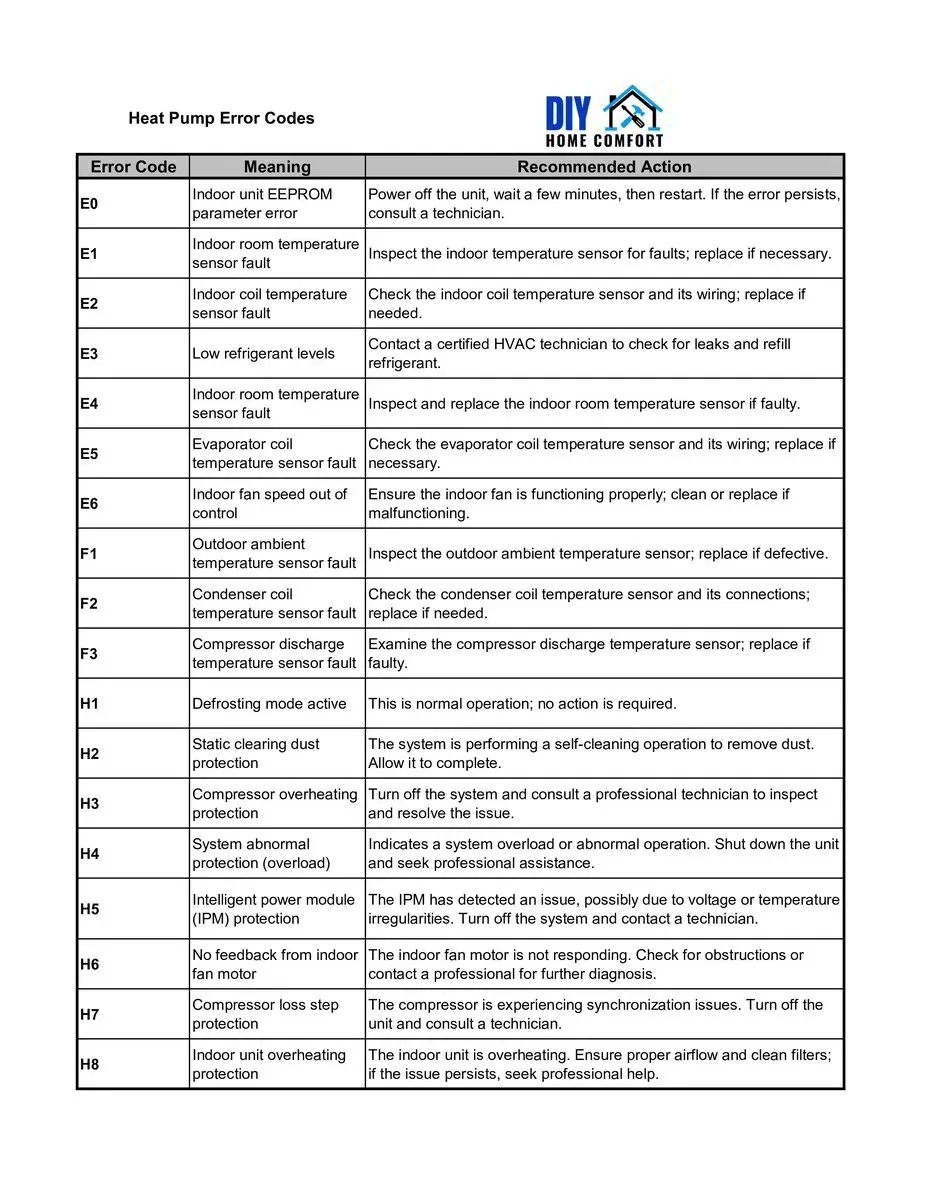
Download the Heat Pump Error Codes PDF Here
Steps for Handling Error Codes
- Consult the User Manual: Refer to your heat pump’s user manual for code-specific troubleshooting steps.
- Reset the System: Power off the heat pump, wait 5 minutes, and restart to see if the code clears.
- Call a Professional: For persistent or unclear issues, contact a licensed HVAC technician to avoid further damage.
Understanding these heat pump error codes ensures timely interventions, helping to maintain system efficiency and prolong its lifespan. Always prioritize safety when troubleshooting!
Conclusion
Heat pump issues like poor heating, cooling, freezing, or unusual noises can often be resolved with simple fixes like adjusting the thermostat, cleaning filters, or clearing debris.
Calling a professional for more complex problems, such as refrigerant leaks or electrical faults, ensures safe and effective repairs. Regular maintenance, such as inspecting filters and cleaning coils, is key to preventing many common problems and prolonging your system’s lifespan.
For even more insights, check out our other heat pump articles to learn about advanced troubleshooting, maintenance tips, and system upgrades.
Taking proactive steps to address minor issues and maintaining your heat pump regularly will keep your home comfortable year-round while saving energy and money. Don’t wait for a breakdown—empower yourself with knowledge and care for your heat pump like a pro!

Scott Harding
Scott is the main author of DIY Home Comfort. He's also an experienced HVAC technician that enjoys home renovation and spending time with his family. You can find out more about him here.