
Eco-Friendly Refrigerants: What Homeowners Need to Know About the R-410A Phase-Out
R-410A is ending in 2025. Learn which eco-friendly refrigerants replace it, what they cost, and how tax credits make the switch affordable.
Quick Take: Beginning January 1, 2025, new U.S. residential air-conditioning systems and heat pumps may no longer be charged with R-410A. This high-GWP HFC joins other traditional refrigerants on the way out as America follows the Kigali Amendment and AIM Act to cut potent greenhouse gases by 85 % by 2036(1).
If you own an older refrigeration system or are planning an upgrade, here’s the plain-English guide to environmentally friendly refrigeration, costs, safety concerns, and the best path to a sustainable future for home comfort.
Key Takeaways — Eco-Friendly Refrigerants
- R-410A is banned in new HVAC units from Jan 1, 2025: plan replacements early.
- Low-GWP options, including R-32, R-454B, Propane (R-290), and CO₂ (R-744), can reduce climate impact by up to 99%.
- Certified A2L/A3 installers and proper leak sensors keep homes safe.
- Federal tax credits, plus state rebates, can slice $2,000 – $8,000 off upgrade costs.
1. Why Refrigerants Matter to Climate and Your Wallet
Every air conditioner, heat pump, or refrigerator keeps you comfortable by pumping heat around with a special fluid called a refrigerant. If that fluid leaks, it can trap far more heat in the atmosphere than an equal amount of carbon dioxide, so regulators are forcing a switch to cleaner options.
Two quick numbers tell the story:
ODP – Ozone-Depletion Potential
Modern refrigerants score 0, so they don’t damage the ozone layer (unlike old CFCs).
GWP – Global-Warming Potential
Measures heat-trapping power vs CO₂.
- R-410A (your likely current refrigerant) ≈ 2,090.
- Low-GWP alternatives range from 675 (R-32)(2) to 1 (CO₂).
- U.S. rules ban any new residential unit that uses a refrigerant above 700 GWP starting January 1, 2025(1).
Why you should care now
- Lower repair risk: R-410A prices are expected to spike as supplies tighten after 2029(1).
- Save money in the long term: Most low-GWP refrigerants run 5–10% more efficiently.
- Cash in on incentives: Federal 25C credit cuts 30% (up to $600–$2,000) off qualifying installs(7).
- Future-proof comfort: Installing a low-GWP or natural refrigerant today means you’re set for the next decade of code changes.
Bottom line: the choice of refrigerant in your next HVAC system isn’t just a technical detail—it’s a comfort, cost, and climate decision rolled into one.
Acronym Cheat Sheet (read this first)
| Term | What It Stands For | What Homeowners Need to Know |
|---|---|---|
| HFC | Hydrofluorocarbon | Common modern refrigerants (e.g., R-410A, R-32); many have high GWP. |
| HFO | Hydrofluoro-olefin | New blends (e.g., R-454B) designed for very low GWP with zero ozone harm. |
| A1 / A2L / A3 | ASHRAE Safety Classes |
A1 = Non-flammable (CO₂) |
A2L = Mildly flammable (R-32, R-454B) |
A3 = Highly flammable (R-290). A2L/A3 units require trained installers and, in some spaces, leak sensors. |
| GWP | Global-Warming Potential | Heat-trapping score vs CO₂ (CO₂ = 1). New HVAC limit is ≤700 as of Jan 1 2025. |
| ODP | Ozone-Depletion Potential | All modern home refrigerants score 0, meaning no ozone damage. |
2. Phase-Out Timeline (AIM Act + Montreal Protocol)
The switch away from R-410A isn’t a cliff edge, it’s a staircase. Each step tightens supply and raises costs a little more. By keeping an eye on the cutoff dates below, you can decide whether to continue using your current system for a bit longer or replace it before parts and refrigerant become too expensive.
Think of the timeline as a planning calendar: the earlier you act, the more choices and rebates you’ll have.
| Date | What Happens | Why Homeowners Should Care |
|---|---|---|
| Jan 1 2025 | New AC & heat-pump units must use refrigerant ≤700 GWP | R-410A systems no longer produced; low-GWP models dominate |
| Jan 1 2026 | Last day to install leftover R-410A inventory | After this, only low-GWP equipment allowed |
| 2029 | Nationwide HFC allowance drops to 60% of baseline | R-410A refrigerant price starts rising |
| 2034 | Allowance falls to 30% | Repairing R-410A systems may cost more than replacement |
| 2036 | Allowance hits 15% (near-total phase-out) | High-GWP refrigerant becomes scarce; full transition complete |
3. Meet the Low-GWP & Environmentally Friendly Refrigerants
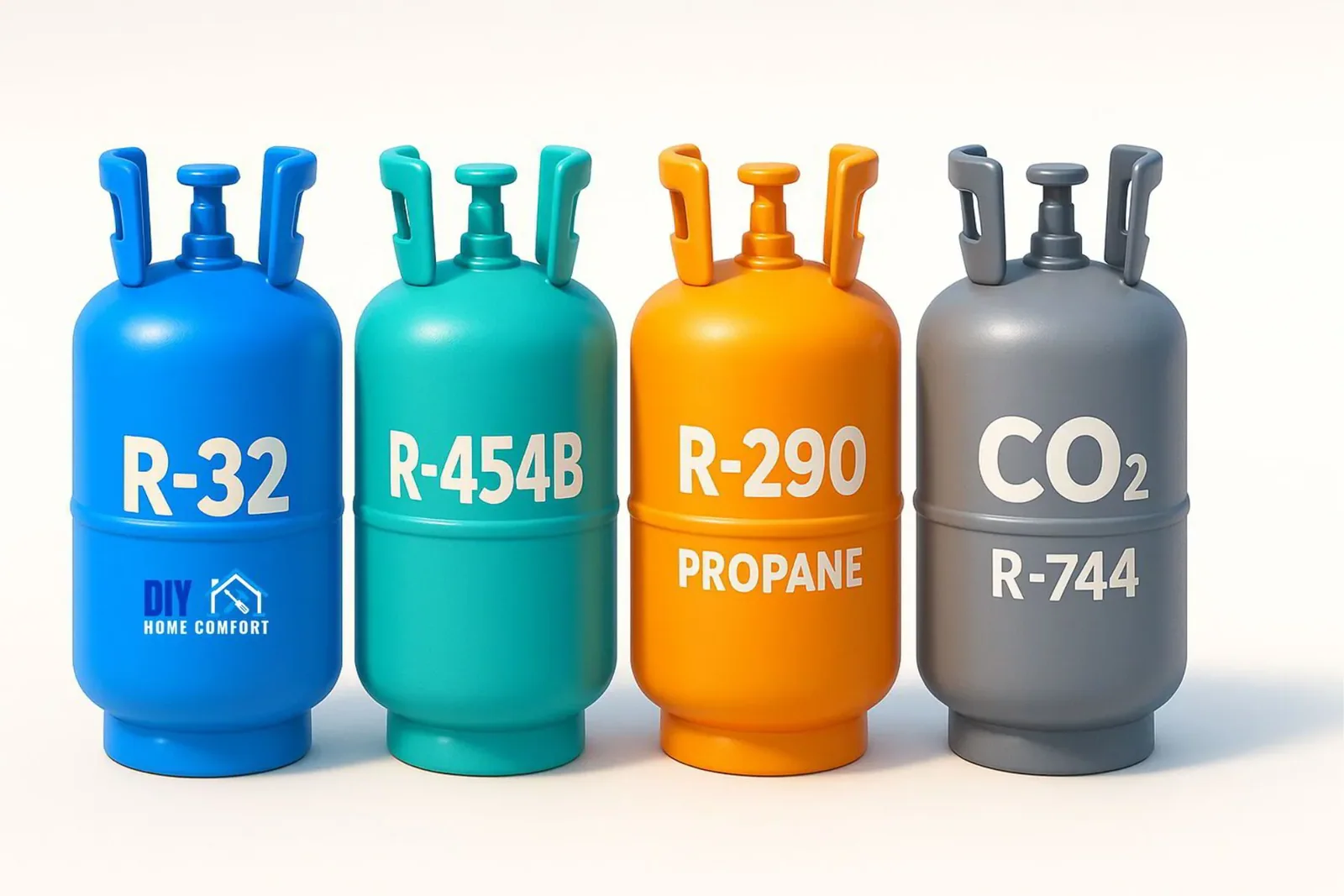
If R-410A is yesterday’s news, what’s taking its place? Four leading contenders are ready for prime time—each with a fraction of R-410A’s climate impact and its pros, cons, and safety rules.
Carrier and Bryant have already committed to R-454B (marketed as Puron Advance) as the direct successor for their 2025 ducted systems(3).
Use the comparison chart that follows to match a refrigerant with your comfort goals, budget, and local code requirements before shopping for a new unit.
| Refrigerant | GWP* | Type / Safety | Homeowner Notes |
|---|---|---|---|
| R-32 | 675 | ⚠️ HFC (A2L) | ~70% lower GWP; installer must follow new safety codes |
| R-454B | 466 | 💧⚠️ HFO Blend (A2L) | Direct R-410A successor; ~75% lower GWP |
| R-290 | ≈3 | 🔥🍃 Hydrocarbon (A3) | Ultra-low GWP; highly flammable; strict charge limits |
| CO₂ (R-744) | 1 | 🧯🍃 Natural (A1) | Zero toxicity; high-pressure hardware required |
*GWP = Global Warming Potential (CO₂ = 1). Federal limit for new HVAC is ≤700 on Jan 1 2025.
4. Can I Retrofit or Replace?
❌ No. Compressors, expansion valves, and copper lines designed for R-410A will not tolerate A2L or natural refrigerants.
Disposal details: Your contractor must evacuate the old gas and send it to an EPA-certified reclaimer; venting to the atmosphere risks five figure fines(4). Haul-away fees typically range from $100 to $200 and are usually included in the quote.
5. Cost & Incentive Snapshot
Sticker shock is real, but so are the discounts. 2025 nationwide data put the average installed cost of a 2-ton central AC at roughly $4,000(5). A typical 3-ton heat pump costs around $5,400 installed, according to the same cost surveys (6).
Federal 25C tax credits reduce those figures by 30% (up to $600 for an AC and $2,000 for a heat pump), and many states offer additional electrification rebates worth $2,000–$8,000.
🔎 Scan the table below like a menu: if the net price fits your budget, great; if not, watch for your state rebate to help close the gap.
| Scenario | Avg Installed Cost | 25C Credit | Net Cost |
|---|---|---|---|
| 🧊 2-ton R-454B AC | ≈$4,000 (Range $3,200–$6,500) |
💸 –$600 (30%) | ≈$3,400 |
| 🔥 3-ton R-32 Heat Pump | ≈$5,400 (Range $4,000–$7,200) |
💸 –$2,000 (30%) | ≈$3,400 |
6 Safety & Code Rules
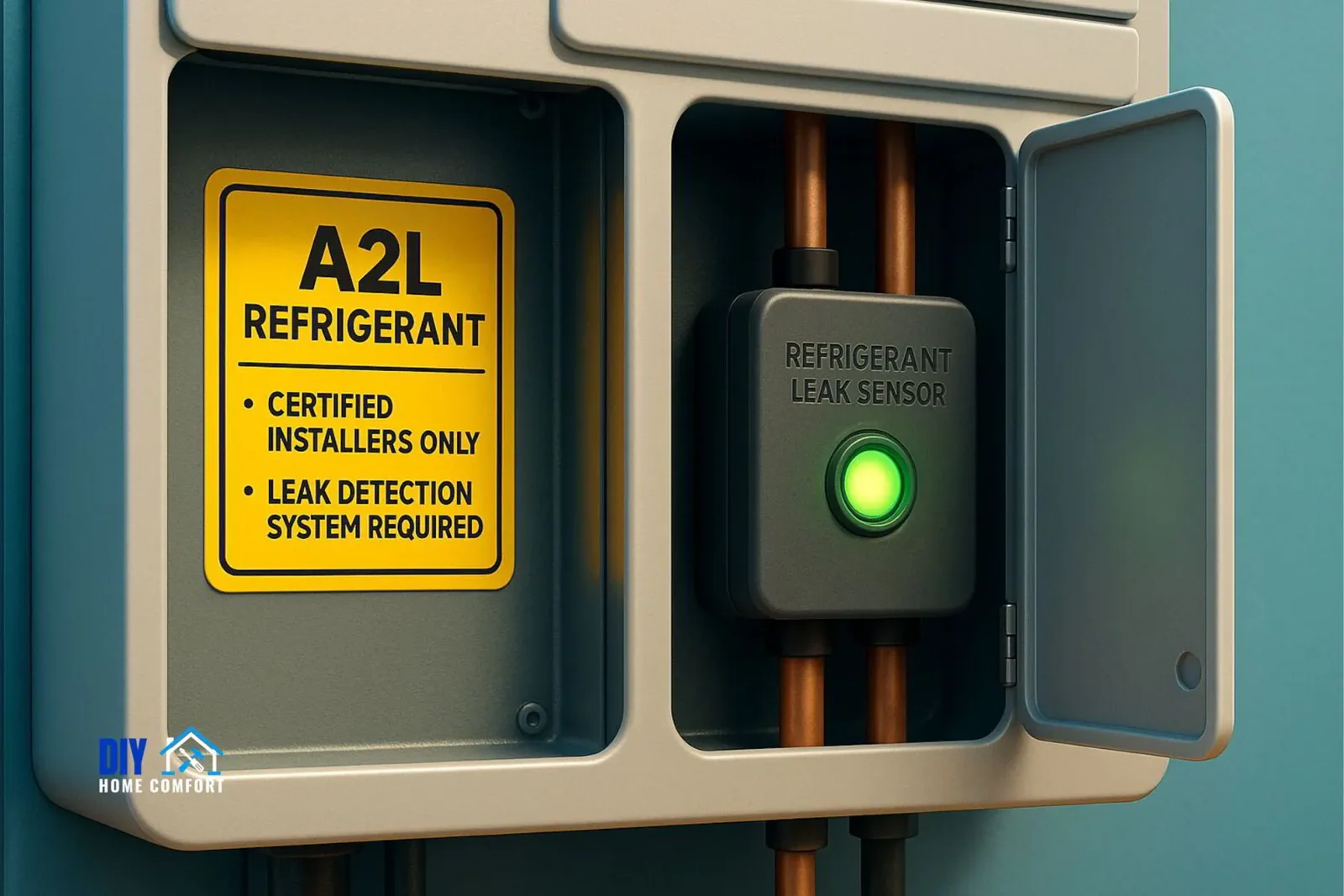
The 2024 mechanical code and UL 60335-2-40 cover mild and highly flammable refrigerants(8,9):
- Installer certification. Ask for proof of A2L/A3 training.
- Leak detection or ventilation. Required if an A2L charge could exceed 25 % of its lower flammability limit in an enclosed space. Example: closets < 700 ft² need a sensor.
- Charge & pipe limits. Larger line-set diameters and charge caps cut pressure and fire risk.
- Labels. Look for a yellow “A2L” or red “A3” tag on outdoor units.
7. Homeowner FAQs
Will servicing R-410A stay legal?
- Yes, but expect higher prices after 2029, as supply is expected to shrink.
Are window air conditioners affected?
- Factory-sealed units shift to R-32 or propane by 2027.
Do low-GWP gases cool as well?
- Yes—often with higher SEER2 and high energy efficiency.
How do I reduce greenhouse gas emissions the most?
- Pair a low-GWP heat pump with smart controls and efficient insulation.
What about commercial and industrial refrigeration?
- CO₂ and propane are already common in those markets.
8. Checklist Before You Sign a Contract
Before you commit to any quote, run through this quick four-point checklist. It’s your homeowner “pre-flight” that catches hidden costs, code issues, or missing incentives, so you enjoy trouble-free cooling for the next decade.
- Confirm the refrigerant and line-set size: Ensure the proposal specifies a low-GWP refrigerant (≤ 700) and the actual copper line-set diameter required for your new system.
- Verify flammable-refrigerant safety measures: For A2L or A3 gases, request to see the installer’s certification, leak sensor plan, and any required ventilation upgrades.
- Compare the net price after incentives: Ensure that the 30% federal 25C credit and any applicable state or utility rebates are factored in; you should see the true out-of-pocket cost, not just the sticker price.
- Ensure the old refrigerant will be reclaimed, not vented: Your quote should include EPA-compliant recovery and disposal of the R-410A, with haul-away fees clearly listed.
Tick these four boxes and you’ll avoid surprise charges, meet all safety codes, and lock in every dollar of available incentive.
9. What's Next?

Researchers are rating refrigerants with AI to find blends that deliver low toxicity, lower GWP values, and high energy efficiency. Magnetocaloric and electrocaloric cooling technologies may eliminate synthetic refrigerants entirely, pointing toward a truly sustainable future for home refrigeration and air conditioning(10).
Conclusion
High-GWP systems are quickly becoming a thing of the past. Choosing a low-GWP or natural refrigerant now means lower energy bills, future-proof compliance, and a lighter carbon footprint. Check your current system’s age, compare refrigerant options, and line up a certified installer before equipment shortages push prices higher.
Looking for more smart HVAC solutions?
Our in-depth exploration of future HVAC trends encompasses everything from solar-powered cooling to AI-driven zoning. It’s your go-to resource for planning the next step in efficient, modern home comfort.
References
- EPA – HFC Phasedown FAQs & AIM-Act schedule (2025)
- Daikin – R-32 Refrigerant Technical Overview (2025)
- Carrier – Puron Advance™ (R-454B) Product Release (2024)
- EPA – Certified Refrigerant Reclaimers List & Venting Rules (2024)
- HomeGuide – Average Cost to Install Central AC (2025)
- Angi – Average Heat-Pump Installation Cost (2025)
- IRS – Energy-Efficient Home Improvement Credit (25C) FAQ (2025)
- UL Solutions – Updated Refrigerant Detection Requirements (2024)
- UL – Deconstructing A2L Refrigerants (Installer Training) (2025)
- CleanTechnica – Magnetocaloric Heat-Pump Research Overview (2024)

Scott Harding
Scott is the main author of DIY Home Comfort. He's also an experienced HVAC technician that enjoys home renovation and spending time with his family. You can find out more about him here.