
Heat Pump vs Gas Furnace: Which is Better for Your Home?
Compare heat pumps and gas furnaces to find the best heating solution for your home. Discover pros and cons to make an informed choice. Read more!

Struggling to choose between a heat pump and a gas furnace?
Your heating system plays a crucial role in home comfort, energy efficiency, and long-term costs—but which one is right for you?
From installation costs to energy savings and climate suitability, each system has its strengths and trade-offs.
In this guide, we’ll break down the key differences, pros and cons, and best use cases so you can make a confident, informed decision.
What is a Heat Pump?
How Heat Pumps Work
A heat pump is a versatile system that transfers heat instead of generating it. During colder months, it pulls heat from the air or ground outside and brings it indoors. In warmer months, the process reverses, expelling heat from your home to cool it.
This energy-efficient approach makes heat pumps ideal for year-round comfort. Unlike traditional heating systems, they don’t rely on combustion, reducing energy consumption and environmental impact. For a deeper dive into how heat pumps work, check out this in-depth article on heat pump technology.
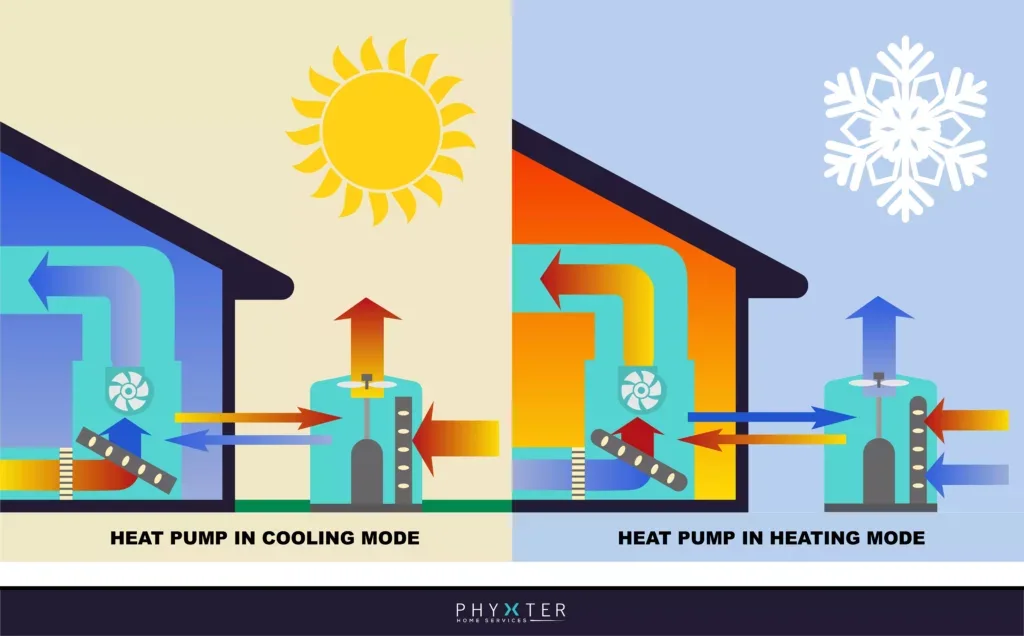
Image Courtesy of Phyxter Home Services
Types of Heat Pumps
Heat pumps come in three main types:
- Air-Source Heat Pumps: These are the most common, extracting heat from the air and working well in moderate climates.
- Ground-Source Heat Pumps (Geothermal): These use stable underground temperatures for efficiency, making them perfect for homes with higher energy needs.
- Water-Source Heat Pumps: These systems extract heat from a water source, such as a nearby lake, well, or groundwater. Though installation depends on site-specific conditions, they are highly efficient and suited for homes with access to a sustainable water supply.
- Hybrid Heat Pumps: Combining a heat pump with a gas furnace, these systems automatically switch to the most efficient option based on outdoor conditions.
Each type suits different climates and budgets, offering flexibility for homeowners seeking energy-efficient solutions.
What is a Gas Furnace?
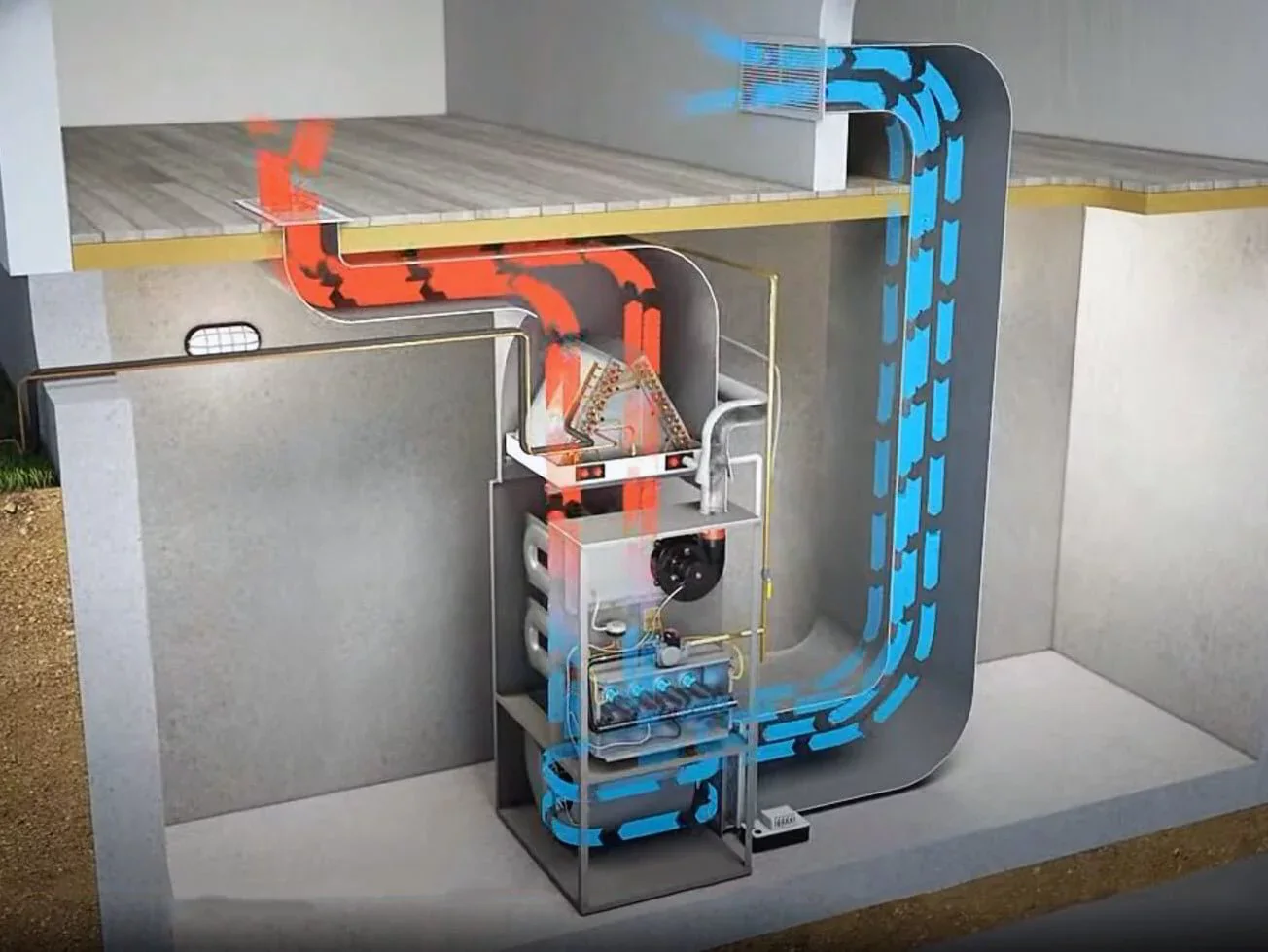
How Gas Furnaces Work
A gas furnace generates heat by burning natural gas or propane. The combustion process creates hot air, which is distributed through ducts to warm your home. Key components include a burner, heat exchanger, blower, and flue for venting exhaust gases.
Gas furnaces are especially effective in cold climates, as they can quickly provide consistent warmth even during freezing temperatures. Known for their reliability and affordability, they remain a popular choice for homeowners seeking efficient heating solutions.
Types of Gas Furnaces
Gas furnaces are available in two main types:
- Standard Efficiency Furnaces: These models typically have an AFUE (Annual Fuel Utilization Efficiency) rating of 80%, making them a budget-friendly option for moderate climates.
- High-Efficiency Furnaces: With AFUE ratings of 90% or higher, these furnaces maximize fuel use, making them ideal for regions with long, harsh winters.
High-efficiency models often include advanced features like sealed combustion chambers and variable-speed blowers, offering better performance and energy savings over time. Choosing the right type depends on your home’s climate and energy goals.
Heat Pump vs Gas Furnace: Key Differences
Efficiency
When it comes to efficiency, heat pumps often outperform gas furnaces in mild climates. Heat pumps are rated using the Seasonal Energy Efficiency Ratio (SEER), with higher SEER values indicating greater efficiency. Conversely, gas furnaces are measured by the AFUE, with high-efficiency models reaching over 90% AFUE.
In colder climates, gas furnaces maintain consistent performance, while heat pumps may struggle as temperatures drop. For example, a heat pump with a 16 SEER can reduce energy costs significantly in moderate climates but may require a supplemental system in harsher conditions.
Lifespan and Maintenance
Gas furnaces typically last 15-20 years, while heat pumps average 10-15 years due to year-round use. A natural gas furnace require less frequent maintenance, mainly annual servicing to ensure safe combustion and clean burners.
On the other hand, heat pumps demand more attention, including biannual checkups for refrigerant levels and coils.
Regular filter changes and clearing debris around the outdoor unit are essential to extend the life of a heat pump. While heat pumps have higher maintenance needs, their ability to heat and cool your home can offset the effort required, especially in moderate climates.
Climate Considerations
Heat Pumps for Mild and Warm Climates
Heat pumps are ideal for mild and warm climates, thanks to their dual functionality for heating and cooling. They efficiently cool homes in summer by transferring heat outside and can provide adequate warmth in regions where winter temperatures stay above freezing, such as the Southeastern U.S.
However, their efficiency decreases in extreme cold, often requiring supplemental heating. Heat pumps provide a year-round, energy-efficient solution for homeowners in these areas. If you live in a variable climate, consider a hybrid system that pairs a heat pump with a gas furnace for optimal performance.
Gas Furnaces for Cold Climates
Gas furnaces excel in cold climates by generating consistent heat even in freezing temperatures. Unlike heat pumps, which struggle with efficiency as temperatures dip below freezing, gas furnaces rely on combustion to produce heat, making them ideal for sub-zero conditions.
Homes in regions like the Midwest and Northeast U.S., where winters are harsh, benefit from the reliability of a gas furnace for cold climates. Their ability to maintain indoor warmth regardless of outdoor temperatures makes them popular for cold-weather heating solutions.
Dual Fuel System as a Hybrid Solution
Dual fuel systems combine the strengths of a heat pump and a gas furnace, automatically switching between them based on the temperature.
In mild weather, the heat pump handles heating and cooling efficiently, reducing energy consumption. When temperatures drop below freezing, the gas furnace takes over, ensuring consistent and reliable warmth.
This dual fuel heat pump or gas furnace setup offers homeowners the best of both worlds: energy efficiency in moderate climates and dependable heating in extreme cold. It’s an ideal solution for regions with variable seasonal temperatures.
Pros and Cons of Heat Pumps and Gas Furnaces
Pros and Cons of Heat Pumps
Advantages:
- Highly energy-efficient, as they transfer heat rather than generate it, reducing energy bills.
- Dual functionality for year-round comfort, providing both heating and cooling.
- Lower carbon emissions, making them eco-friendly and suitable for sustainability-conscious homeowners.
- Ideal for moderate climates, where winter temperatures rarely drop below freezing.
Example: Homeowners in the Southeast U.S. often save significantly on energy bills by using a heat pump system instead of traditional systems.
Drawbacks:
- High initial costs, typically ranging from $4,000 to $10,000, including installation.
- Reduced effectiveness in extreme cold, requiring supplemental heating in freezing conditions.
- Shorter lifespan (10–15 years) compared to gas furnaces.
Pros and Cons of Gas Furnaces
Advantages:
- More affordable upfront, with installation costs ranging from $2,500 to $5,500.
- Provides consistent, reliable heat even in sub-zero temperatures, making them ideal for cold climates.
- Long lifespan (15–20 years) with proper maintenance.
- Requires minimal upkeep, with annual servicing typically sufficient.
Example: Homeowners in the Midwest often rely on gas furnaces for dependable heating during harsh winters.
Drawbacks:
- Relies on fossil fuels, leading to higher carbon emissions compared to heat pumps.
- Long-term operating costs can fluctuate due to changes in natural gas prices.
- Lacks dual functionality, as they only provide heating.
Factors to Consider When Choosing a Heating System
Cost and Budget Considerations
The cost of installing and operating a heat pump or gas furnace can vary significantly. Heat pump systems generally have higher upfront costs, ranging from $4,000 to $10,000, while gas furnaces are more affordable at $2,500 to $5,500.
However, long-term costs depend on operational efficiency and energy prices—electricity for heat pumps and natural gas for furnaces. In mild climates, heat pumps often save money due to lower energy use, while gas furnaces may be more cost-effective in cold regions where natural gas is cheap.
Financing options, such as low-interest loans or leasing programs, can ease upfront expenses for both systems. Additionally, many governments and utility companies offer rebates for energy-efficient heat pumps, further offsetting installation costs.
When choosing a heating system, it’s important to calculate lifetime costs, including maintenance, energy savings, and available incentives.
🛑 Disclaimer: Every situation is unique, and costs can vary significantly based on your location, the contractor you hire, and the specifics of your heat pump system. Always consult multiple HVAC professionals in your area for accurate estimates tailored to your circumstances.
Home Size and Insulation
The size and insulation of your home significantly impact heating system efficiency. Larger homes with poor insulation require more powerful systems, making gas furnaces a better fit in colder regions. Heat pumps are ideal for well-insulated homes, where they can maintain consistent temperatures without overworking.
When choosing heating systems for your home, consider conducting an energy audit to evaluate insulation levels, air leaks, and heating requirements. Upgrading insulation and sealing drafts can enhance system efficiency, potentially allowing homeowners to choose a smaller, more cost-effective unit without sacrificing comfort.
Energy Goals and Environmental Concerns
For environmentally conscious homeowners, heat pumps are a clear winner. They use electricity to transfer heat, resulting in lower carbon emissions compared to fossil fuel-reliant gas furnaces. Heat pumps also align with long-term energy goals, especially in areas where renewable electricity is available.
On the other hand, gas furnaces produce higher emissions and depend on non-renewable natural gas or propane. If sustainability and reducing your carbon footprint are priorities, eco-friendly heating systems like heat pumps are the better choice.
Heat Pump vs Gas Furnace: Which is Better for Your Home?
Choosing between a heat pump vs gas furnace depends on your unique circumstances. Key factors to consider include:
Climate:
- Heat pumps are best for moderate climates where winters are mild.
- Gas furnaces excel in cold climates, providing consistent heat even in freezing temperatures.
Budget:
- Heat pumps have higher upfront costs but may save more on energy bills in the long run.
- Gas furnaces are more affordable to install but may have fluctuating fuel costs.
Energy Goals:
- Heat pumps are an eco-friendly choice, reducing carbon emissions.
- Gas furnaces rely on fossil fuels and produce higher emissions.
For personalized advice, consult an HVAC professional to assess your home’s insulation, size, and specific needs.
Conclusion
Both heat pumps and gas furnaces have their advantages, and the best choice depends on your climate, budget, and energy goals.
- Choose a heat pump for energy efficiency, eco-friendliness, and year-round heating and cooling—ideal for mild to moderate climates.
- Opt for a gas furnace if you need powerful, consistent heat in freezing temperatures and a lower upfront installation cost.
Still unsure? Consult an HVAC expert to assess your home’s needs, or explore our other heat pump articles for expert insights. A well-chosen system ensures comfort, efficiency, and long-term savings.

Scott Harding
Scott is the main author of DIY Home Comfort. He's also an experienced HVAC technician that enjoys home renovation and spending time with his family. You can find out more about him here.