
What’s the Best Location for an AC Outdoor Unit?
When installing a new AC, the best location for the outdoor unit is crucial to its cooling performance. Learn more about where it should be located in relation to your home.
You know you’re in the summer months when you start sweating, and it’s time to switch on the air conditioning and stay cool. But what happens when your air conditioner is not working correctly? It’s time to either repair or replace your HVAC system or install a new AC unit.
🤔 One of the first fundamental questions when installing a new AC is where to install the outdoor unit.
If it’s a replacement and the answer is 'the same spot as the last one,' then take a pause. The previous location may not have been the best spot, so you should reevaluate AC placement to determine the most efficient area around your home.
As HVAC contractors, we often see it; proper condenser unit placement can save you a significant amount of money and effort.
Best Location for AC Outdoor Unit?
In North America, your air conditioner should be installed on the east or north side of your home, allowing your home itself to shade your AC unit from the sun during the hottest part of the day. The location must also have good airflow to facilitate the refrigeration cycle.
Now you know a little more about your cooling system. This can help when asking questions to ensure you have hired a reputable and knowledgeable HVAC company.
Where Not To Put It!
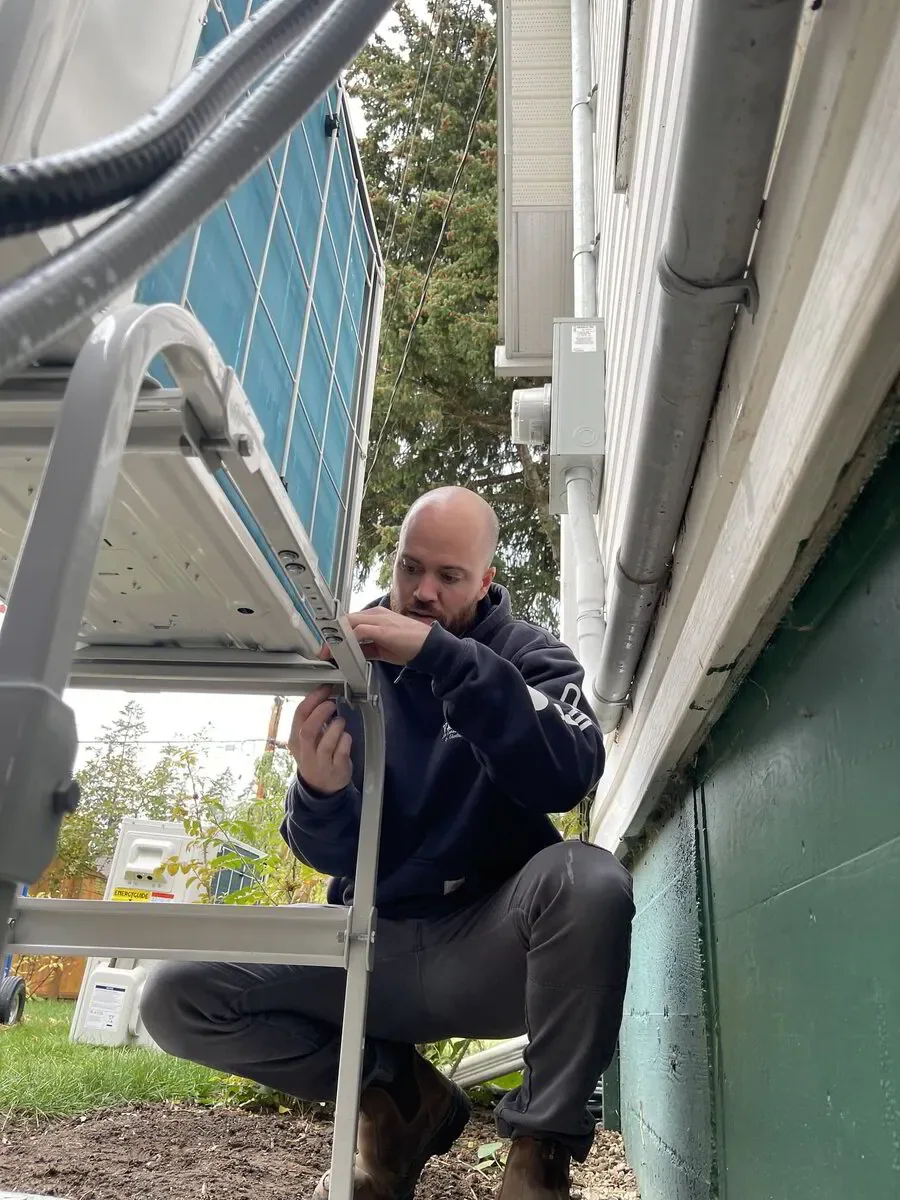
Most homeowners (and some HVAC technicians!) think the inconspicuous spot is the best place to install an AC or heat pump condenser, or to place it where the old AC outdoor unit used to sit.
However, this lack of analysis of how refrigeration works can lead to several issues, where improper installation will affect the efficient operation of your air conditioner or heat pump.
For example, if the outdoor unit is placed in an area affected by water runoff from your roof, the additional water above and beyond what would typically fall from the sky can adversely affect the electrical components of your cooling system.
Likewise, if it’s placed where it’s exposed to direct sunlight all day long, your unit will struggle to release heat from the coil, which in turn will prevent the refrigerant from cooling down as it’s exposed to high temperatures.
If your old outdoor unit was in the incorrect position, you are just replacing one problem with another, hence why correct analysis of air conditioner placement is required.
The same applies to a mini split air conditioner and heat pumps.
Poor placement of your condenser can have long-term effects on cooling efficiency and service life, which ultimately translates to higher costs on your utility bills.
If you're like me, you'd prefer to keep dollars in your pocket and not give them away to the Power and HVAC gods, so it’s worth considering a suitable location for your outdoor unit before it’s installed.
Outdoor Unit Location, Location, Location!
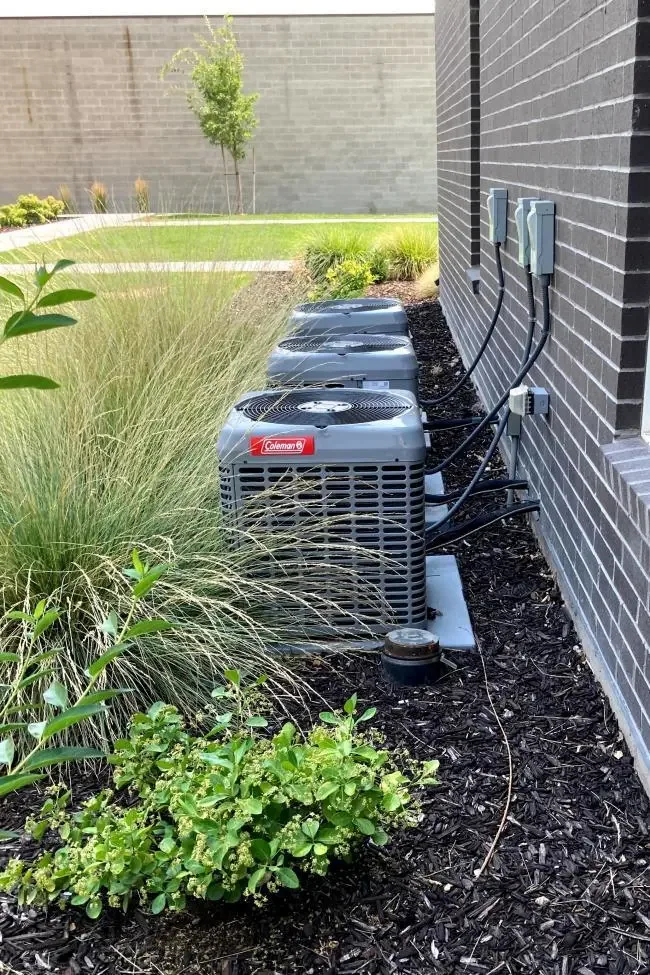
Regardless of the type and size of the air conditioner or heat pump being installed, several important considerations must be followed for efficient placement.
- There must be a minimum of 2 to 3 feet of space surrounding the unit for maximum airflow.
- No obstructions should be within that open space envelope or near other heat sources.
- The outdoor unit should not be installed in passageways and should be easily accessible for maintenance.
- AC units should not be placed near or behind doors or outdoor furniture.
- The outdoor AC unit should not be placed indoors in areas such as the garage or attic. They are called outdoor units for a reason.
- The condenser needs to be elevated enough so that it does not collect water during rain. The unit should be permanently mounted onto a concrete pad for stability.
- As mentioned above, the unit should be level to ensure the refrigerant operates correctly and provides adequate cooling efficiency.
- Be aware of the noise output with the placement. For example, you don’t want to annoy your neighbors or yourself if it’s parked too close to a window of a room or gathering area.
Points to Remember: What NOT to Do!
- Direct sunlight can interfere with how your AC operates and dissipate heat. Your AC keeps you cool by transferring heat from inside your home to the outside. It has to work harder in the sun to achieve that.
- Shading the unit doesn’t always work either. Your condenser requires a significant amount of airflow in and around the unit, and shading can obstruct this if the unit is mounted too close.
- As per the point about direct sunlight, your new unit should not be mounted on the hotter side of your home. A naturally cooler side of your home will help your AC work more efficiently.
- Be aware of the distance between indoor and outdoor units. The length of the copper pipe between the 2 can affect cooling efficiency.
Your AC keeps you cool by transferring heat to regulate your home's temperature properly; everything you can do to make the job easier means less money spent on electricity to power this system.
Also, extended run times mean more strain on internal components, which in turn means more repairs that cost money….. So let’s not give any more money to the AC gods than we have to.
If you cannot answer this question about where your outdoor unit should be located, then it’s best to ask your local HVAC technician, who should know where your AC unit should be placed.
Now you know a little more about your cooling system. This can help when asking questions to ensure you have hired a reputable and knowledgeable HVAC company.
Conclusion
Choosing the best location for your AC outdoor unit isn’t just about convenience—it’s about comfort, efficiency, and long-term performance. By placing it in a shaded, well-ventilated, and accessible area with proper clearance, you’ll reduce strain on your system and lower your energy bills. Whether you're installing a new unit or relocating an existing one, a little planning now can lead to big savings and cooler summers.
Want more expert home comfort tips? Check out our other guides on Air Conditioning and Heat Pumps.

Scott Harding
Scott is the main author of DIY Home Comfort. He's also an experienced HVAC technician that enjoys home renovation and spending time with his family. You can find out more about him here.